

Discovery and Settlement of the Americas
The Age of Exploration and Discovery led Europeans to the New World in search of new trade routes to the Far East. They had no idea when they first sailed to the west that there was land — much less an entire continent — blocking their path. They were further surprised when they found the land was populated, initiating a clash of cultures that transformed both the Old World and the New World.
1. The Shaping of North America
The continents slowly separated and were once a single giant landmass. Shifting created mountain ranges, and then, about 2 million years ago, global cooling initiated the Great Ice Age. As glaciers melted, they removed topsoil and formed the Great Lakes.
1.1 — Forming the Continents
- At one time, a single supercontinent, Pangea, included the landmasses of Eurasia, Africa, Australia, Antarctica, and the Americas.
- The separation of landmasses led to the formation of the Atlantic Ocean and the Indian Ocean.
- Identical fish species in separate freshwater lakes provide evidence of the existence of a single original continent.

1.2 — Mountain Ranges in North America
- Changes in the Earth’s crust led to the formation of mountain ranges.
- The Appalachian Mountains likely formed around 350 million years ago.
- Western North American mountain ranges such as the Rockies, Sierra Nevada, Cascades, and Coast Ranges are relatively young in geological terms, forming 135 million to 25 million years ago.
1.3 — North America Takes Shape
- About 10 million years ago, North America’s basic geological shape had taken form.
- The Canadian Shield, an ancient rock zone, anchored the northeastern corner of the continent.
- An eastern coastal plain with river valleys, known as the Tidewater, sloped gently upward to the Appalachian Mountains.
- The western side of the Appalachian Mountains sloped down into a midcontinent basin that stretched to the Mississippi Valley and rose to the Rocky Mountains.
- The crest of the Rocky Mountains is referred to as the “roof of America.”
- The Great Basin was located between the Rockies and the coastal mountain regions, the Sierra Mountains, and the Cascades.
- In the northwest, great valleys were formed by the Sacramento River, the San Joaquin River, the Willamette River, and Puget Sound.
1.4 — The Great Ice Age
- The Great Ice Age started roughly 2 million years ago.
- Two-mile-thick ice sheets covered parts of Europe, Asia, and the Americas.
- In North America, glaciers extended as far south as Pennsylvania, the Ohio Country, and the Dakotas.
- The movement and melting of glaciers significantly altered the landscape.
1.5 — Lake Bonneville and Waterways Take Shape as Glaciers Retreat
- The retreat of glaciers around 10,000 years ago transformed the North American landscape.
- The weight of the ice mantle depressed the Canadian Shield.
- Glacial action created shallow depressions on the shield’s surface, forming lakes.
- The Great Lakes originally drained southward to the Gulf of Mexico.
- The unblocking of the Gulf of St. Lawrence redirected the Great Lakes water to the Atlantic Ocean.
- Lake Bonneville was a massive inland lake that covered areas of present-day Utah, Nevada, and Idaho. It eventually drained into the Pacific Ocean through the Snake and Columbia River systems.
- Diminishing rainfall led to Lake Bonneville’s shrinking, leaving a mineral-rich desert in most places.
- The Great Salt Lake remains as a relic of Lake Bonneville.
- Ancient beaches of Lake Bonneville are visible on mountainsides in the Great Basin, up to 1,000 feet above the floor of the Great Basin.
2. Peopling the Americas
The Great Ice Age had a significant impact on the continent’s human history. As the sea level fell, it revealed a land bridge connecting Eurasia to North America near the current Bering Sea.
Nomadic Asian hunters likely crossed this bridge, following migrating game herds, and dispersed throughout America over 2,000 years. They laid the foundation for various advanced civilizations, such as the Incas in Peru, the Mayans in Central America, and the Aztecs in Mexico.
2.1 — The Impact of the Ice Age and the Land Bridge on Human Migration
- The Great Ice Age affected the geological and human history of North America.
- Evidence suggests early human migration to the Americas may have occurred by land or even by crude boats.
- Approximately 35,000 years ago, massive glaciers that formed during the Ice Age caused a drop in sea level.
- A land bridge connecting Eurasia with North America appeared in the region of the present-day Bering Sea, allowing the migration of Asian hunters.
- These early Asian hunters, ancestors of Native American Indians, likely crossed the Bering Isthmus and slowly populated the American continents.
- The land bridge was submerged by rising sea levels about 10,000 years ago, isolating the American continents from further immigration.
2.2 — The Migration and Diversification of Early Americans
- After the end of the Ice Age and the melting of glaciers, ice-free valleys formed, enabling early humans to migrate southward and eastward across the Americas.
- Over time, these migrating groups of humans reached the southern tip of South America, covering a vast distance of approximately 15,000 miles from their Siberian origins.
- By the arrival of Europeans in 1492, an estimated 54 million people inhabited the American continent.
- These populations diversified into numerous tribes, spoke over 2,000 distinct languages, and developed various religions, cultures, and ways of life.
2.3 — Advanced Civilizations in the Americas
- Civilizations such as the Incas in Peru, Mayans in Central America, and Aztecs in Mexico achieved remarkable sophistication.
- Their advanced agricultural practices, centered on maize (Indian corn), supported large populations, potentially reaching 20 million in Mexico alone.
- Despite the absence of large draft animals and the wheel, these civilizations constructed elaborate cities and engaged in extensive trade.
- They possessed talented mathematicians who made precise astronomical observations.
- The Aztecs practiced human sacrifice, with more than 5,000 individuals ritually slaughtered to commemorate certain events, such as the crowning of an Aztec chieftain.
AHC Note — Mesoamerican cultures were aware of the wheel because it was used on toys. However, it was not used as a means of transportation, but the exact reason is unknown.

3. The Earliest Americans
Corn cultivation played a significant role in population growth and became a primary crop. Planting corn led to the transition of nomadic hunting groups into settled agricultural communities, and it spread throughout North America. The cultivation of maize, beans, and squash enabled three-sister farming.
The Mound Builders in the Ohio River Valley, the Mississippian Culture in the lower Midwest, and the Anasazi People in the Southwest sustained sizable settlements after adopting corn cultivation. However, these cultures mysteriously declined around 1300 CE, possibly due to prolonged drought. In the northeastern woodlands, the Iroquois Confederacy formed, influenced by the legendary Hiawatha.

3.1 — The Role of Agriculture in Native American Civilizations
- Agriculture, particularly the cultivation of corn, played a crucial role in the development of Native American civilizations in Mexico and South America.
- Around 5000 B.C., hunter-gatherers in highland Mexico transformed wild grass into corn, which became a staple crop.
- Corn served as the foundation for complex, centralized societies like the Aztecs and Incas.
- The cultivation of corn gradually spread across the Americas, transforming nomadic hunting bands into settled agricultural communities.
3.2 — Corn’s Influence on Pueblo Culture and Southwestern America
- Corn planting reached the American Southwest by around 1200 B.C.
- Pueblo People in the Rio Grande Valley constructed intricate irrigation systems to support their cornfields.
- Spanish explorers encountered Pueblo villages with multistoried, terraced buildings in the 16th Century.
AHC Note — The word “pueblo” is Spanish for “village.”
3.3 — Timing of Corn’s Arrival in North America
- Corn cultivation reached other parts of North America at varying times, influencing the development of Native American societies.
- North and east of the Pueblo region, social life was less complex, with no densely populated areas or complex nation-states comparable to the Aztec Empire.
- The relative ease of European colonization of native North Americans can be attributed, in part, to these differences.
3.4 — Decline of Ancient Cultures and Maize Cultivation
- Ancient cultures, such as the Mound Builders of the Ohio River valley, Mississippian culture, and Anasazi peoples, experienced growth and decline after adopting corn cultivation.
- Cahokia, near present-day East St. Louis, once housed up to twenty-five thousand people.
- The Anasazi built an elaborate pueblo at Chaco Canyon in modern-day New Mexico but declined around A.D. 1300, possibly due to drought.
3.5 — Three-Sister Farming and Southeastern Atlantic Seaboard
- Maize cultivation, along with high-yield strains of beans and squash, reached the southeastern Atlantic seaboard around A.D. 1000.
- “Three-sister” farming involved beans growing on cornstalk trellises, with squash covering planting mounds to retain soil moisture.
- This environmentally clever farming technique led to high population densities among Creek, Choctaw, and Cherokee peoples.
3.6 — The Iroquois Confederacy and Matrilineal Cultures
- The Iroquois Confederacy in the northeastern woodlands developed a political and military alliance, resembling the great nation-states of Mexico and Peru.
- Many North American native groups lived in small, scattered, and impermanent settlements.
- Women in settled agricultural groups often held authority, and matrilineal cultures were present, passing power and possessions down the female family line.
- Initially, there were 5 tribes in the confederacy, which was inspired by the legendary leader, Hiawatha.
- The original tribes were the Mohawk, Oneida, Onondaga, Cayuga, and Seneca.
- The English called them the Five Nations.
AHC Note — The Tuscarora joined in the early 1700s, making it the Six Nations.
3.7 — Native Americans’ Relationship with Nature
- Native Americans had a different approach to nature compared to Europeans.
- They did not possess the desire or means to manipulate nature aggressively.
- They revered the physical world and attributed spiritual properties to nature.
- They occasionally used controlled forest fires to improve hunting habitats, creating open, park-like landscapes in the eastern woodlands.
3.8 — Sparse Native American Population
- In 1492, the Native American population in North America was relatively low, estimated at around 4 million.
- Vast areas of the continent remained untouched by humans of any origin.
- Native Americans were unaware that the European “discovery” would end the isolation of the Americas and bring significant changes to the land and its people.
4. Indirect Discoverers of the New World
Scandinavians known as Norsemen and Vikings were the first Europeans to make their way to North America, around 1000 A.D., long before nations formed, at least as we know them today. At that time, nations were collections of kingdoms. As religious wars swept across Europe and Asia, Europeans came into contact with new locations, cultures, goods, and products. When they returned home with new goods and products that were not available in Europe, it triggered a desire to search for and develop new trade routes.
4.1 — Early Norse Exploration of North America
- Norse seafarers from Scandinavia discovered the northeastern part of North America around A.D. 1000.
- They landed near L’Anse aux Meadows in present-day Newfoundland and named the place Vinland.
- However, there was no strong nation-state supporting these early voyagers, and their settlements were eventually abandoned and forgotten.
- Knowledge of their discovery persisted in Scandinavian sagas and songs.

4.2 — European Ambitions and Contact with a Wider World
- Restless Europeans, with the backing of ambitious governments, sought contact with the wider world for purposes of conquest or trade.
- This quest set the stage for a series of events that included efforts to reach Asia, exploration of Africa, and the accidental discovery of the New World.
4.3 — Influence of Christian Crusaders
- Christian crusaders who attempted to capture the Holy Land from Muslim control between the 11th and 14th Centuries (the Crusades) played a role in indirectly discovering America.
- Although their military efforts in the Holy Land were unsuccessful, they developed a taste for the exotic goods of Asia.
- The desire for Asian goods, including silk, drugs, perfumes, colorful draperies, and spices like sugar, had significant implications for European consumption and world history.
4.3 — The Expensive Journey for Eastern Luxuries
- Luxuries from the East, such as spices and silk, were highly sought after in Europe but were expensive.
- These goods had to be transported over vast distances from regions like the Spice Islands (Indonesia), China, and India, which was expensive and dangerous.
- The journey involved traversing the Indian Ocean, the Persian Gulf, the Red Sea, or land routes through Asia and the Arabian Peninsula.
- Muslim middlemen along these routes added to the cost.
- By the time these goods reached Italian merchants in cities like Venice and Genoa, they were extremely costly, limiting both purchasers and profits.
4.4 — European Desire for Cheaper Trade Routes
- European consumers and distributors were eager to find less expensive trade routes to Asia or to develop alternative sources of supply.
- The desire to access Asian riches and reduce the cost of trade would motivate European explorations and eventually lead to their arrival in the New World.
5. Europeans Enter Africa
Marco Polo’s travels inspired Europeans, who developed new ships that enabled more efficient travel and discovered favorable trade winds for easier voyages back to Europe. The Portuguese took the lead in exploring southern Africa and established trading posts for gold and slaves. The Portuguese also traveled further south in search of an Asian water route. Bartolomeu Dias rounded the southernmost tip of Africa in 1488, while Vasco da Gama reached India a decade later. Meanwhile, Spain grew in strength and sought to discover new sources of wealth through exploration.
5.1 — Marco Polo and China
- Marco Polo, an Italian adventurer, returned to Europe in 1295 after a nearly 20-year journey in China.
- His accounts of China, although their accuracy is debated, inspired European desires for Asian treasures.
- Polo can be seen as an indirect discoverer of the New World due to his influence on European perceptions of the East.
5.2 — Portuguese Develop the Caravel
- Before the mid-15th Century, European sailors hesitated to sail southward along the West African coast due to prevailing northerly winds and south-flowing currents.
- Portuguese mariners overcame these obstacles around 1450 with the development of the Caravel, a ship that could sail more effectively into the wind.
- They discovered a return route to Europe by sailing northwesterly from the African coast toward the Azores, where westward breezes would carry them home.
5.3 — Portuguese Explore Sub-Saharan Africa
- Sub-Saharan Africa remained remote and mysterious to Europeans due to the Sahara Desert barrier.
- The northern shore of Africa had been known to Europe since antiquity.
- Portuguese navigators began to explore West African coastal areas in the mid-15th Century, providing Europeans with direct access to sub-Saharan Africa.
5.4 — Portuguese Establish the Slave Trade
- Portuguese established trading posts along the African shore for the purchase of gold and slaves.
- Slavery was already a practice in Africa before European arrival, involving Arab merchants and Africans.
- Slaves from distant sources were sold at higher prices, facilitating separation from their tribes and mixing with unlike people to prevent resistance.
- Slavery by its nature contributed to the extinction of regional African cultures and tribal identities.
5.5 — Portuguese Adopt the Plantation Economy
- Portuguese adopted Arab and African practices in slave trading to work sugar plantations on African coastal islands.
- Slave trading became a significant business, with thousands of Africans transported to Atlantic sugar islands.
- This plantation economy shaped the destiny of much of the New World, emphasizing large-scale commercial agriculture and wholesale exploitation of slave labor.
5.6 — Bartolomeu Días and Vasco da Gama
- Portuguese continued their exploration southward, with Bartolomeu Días rounding the southern tip of Africa in 1488.
- Vasco da Gama reached India in 1498, marking a significant milestone in the search for a water route to Asia.
5.7 — Ferdinand and Isabella Unite Spain
- Spain was united by the marriage of Ferdinand of Aragon and Isabella of Castile.
- The expulsion of Muslim Moors from Spain after centuries of conflict contributed to Spanish unity.
- Spain sought to challenge Portuguese rivals in accessing Asian wealth, leading to a focus on westward exploration.
6. Columbus Comes Upon a New World
Spain embraced the spirit of optimism and adventure that emerged during the Renaissance in the 14th Century. Christopher Columbus convinced the Spanish monarchs to sponsor an expedition to find a new water route to the legendary Indies. During his voyage, he encountered a landmass obstructing the ocean path. Columbus was so convinced that he had reached the Indies that he referred to the native inhabitants as “Indians,” a name that has endured. His discovery effectively connected the four continents of Europe, Africa, South America, and North America.
6.1 — Setting the Stage for Change
- European demand for products from lands beyond the Mediterranean led to a desire for more affordable goods.
- Africa had become a source of cheap slave labor for plantation agriculture.
- Portuguese voyages demonstrated the feasibility of long-range ocean navigation.
- Spain was evolving into a modern nation-state with unity, wealth, and power.
- The Renaissance in the 14th Century created an ambitious spirit of optimism and adventure.
- The introduction of printing presses around 1450 facilitated the spread of scientific knowledge.
- The mariner’s compass reduced uncertainties in sea travel.
- The New World, unaware of its impending discovery, awaited European explorers.
6.2 — First Voyage of Christopher Columbus
- Christopher Columbus, an Italian seafarer, convinced Spanish monarchs to fund his expedition.
- He set sail westward with three small but seaworthy ships.
- His superstitious crew grew mutinous during the voyage.
- On October 12, 1492, they sighted an island in the Bahamas, marking the discovery of a new world.
- Columbus’s achievement led to the vision of Europeans expanding into the unknown.
6.3 — Columbus’s Misconception and Geographic Impact
- Columbus was initially seeking a new water route to the Indies but had unintentionally encountered a massive land barrier.
- Explorers for decades attempted to find a way through or around this barrier.
- It gradually became evident that new continents had been discovered.
- Columbus mistakenly called the native peoples “Indians,” a geographical misnomer that persisted.
6.4 — The Global Economic Impact of Columbus’s Discovery
- Columbus’s discovery had profound consequences on four continents: Europe, Africa, and the two Americas.
- An interdependent global economic system emerged on an unprecedented scale.
- Europe provided markets, capital, and technology.
- Africa supplied labor.
- The New World offered raw materials, particularly precious metals, and land for cultivating sugar cane.
- The world post-1492 underwent irreversible changes for Europeans, Africans, and Native Americans, affecting their lives for better or worse.

7. When Worlds Collide
New World crops transformed the global economy and European diets. In return, Europeans introduced Old World crops and animals to the Americas. Unintentionally, Europeans introduced various organisms that were transported via ships, either by humans or rats. They unknowingly — and unintentionally — carried germs responsible for diseases like smallpox. The native populations lacked immunity to these diseases, and while enslavement and armed conflicts had their impacts, the diseases had the most devastating effect, particularly in the New England region.
7.1 — Clash of Ecosystems
- Columbus’s encounter in 1492 brought together two distinct ecosystems, those of the Old and New Worlds.
- Flora and fauna of the two worlds had been separated for thousands of years, leading to a sense of wonder among European explorers.
- The New World introduced exotic animals and plants to Europe.
- Native New World plants, such as tobacco, maize, beans, tomatoes, and potatoes, revolutionized the international economy and European diets.
- About three-fifths of crops cultivated globally today originated in the Americas.
- The introduction of New World foodstuffs in Africa may have contributed to population growth, offsetting losses from the slave trade.
- This transfer between the two worlds is called the “Columbian Exchange.”
7.2 Exchange of Crops and Animals
- Europeans introduced Old World crops and animals to the Americas, impacting Native American cultures and diets.
- Columbus returned to Hispaniola in 1493 with a variety of animals, including cattle, swine, and horses.
- Horses rapidly spread across the North American mainland through Mexico, transforming Native American societies.
- The introduction of sugar cane led to a “sugar revolution” in the European diet and a surge in the forced migration of Africans to work in the New World’s sugar industry.
AHC Note — The trade of sugar and molasses was a significant factor in the development of Triangular Trade Routes, because of Sugar Plantations in the West Indies.
7.3 Unintentional Introduction of Microbes
- Europeans unintentionally brought other organisms with them, including seeds of Kentucky bluegrass, dandelions, and daisies.
- More ominously, they carried germs that caused diseases like smallpox, yellow fever, and malaria.
- Native Americans had been isolated from most Old World diseases, which had disappeared among them.
- Generations of isolation resulted in a lack of natural resistance to Old World diseases among Native Americans.
- European diseases quickly devastated Native American populations.
- Within fifty years of the Spanish arrival in Hispaniola, the Taino population declined from 1 million to about 200.
- Diseases, not firearms or enslavement, were the deadliest killers.
- As many as 90% of Native Americans perished in the centuries following Columbus’s arrival, leading to a demographic catastrophe.
- Entire cultures and ways of life were extinguished due to depopulation.
- Native Americans unintentionally infected early explorers with syphilis, introducing the disease to Europe.
8. The Spanish Conquistadors
The value of the Americas led to the establishment of the Treaty of Tordesillas, which divided the New World between Portugal and Spain. This division fueled the ambitions of numerous explorers — known as Conquistadors — who sought riches and aimed to explore and conquer lands in both North and South America. The abundance of gold in the New World played a pivotal role in reshaping the global economy. To control and subjugate the native populations, Europeans employed various techniques, including the Encomienda System being the most prevalent.
8.1 — Treaty of Tordesillas
- Europeans gradually realized the wealth of the American continents, particularly the gold and silver in the advanced Indian civilizations of Mexico and Peru.
- The Treaty of Tordesillas (1494) divided the New World between Spain and Portugal.
- Spain received the lion’s share, while Portugal obtained territories in Africa, Asia, and future Brazil.
AHC Note — The Treaty of Tordesillas was negotiated after Pope Alexander VI issued the Inter Caetera, which established the Line of Demarcation, or Papal Line of Demarcation, in the New World. The Treaty of Tordesillas was based on the Line of Demarcation.

8.2 — The Spanish Conquistadors
- Spain became the dominant exploring and colonizing power in the 1500s.
- Spanish Conquistadors, driven by the pursuit of gold and glory, explored the Caribbean and the American mainland.
- Vasco Nuñez Balboa claimed all lands washed by the Pacific Ocean in 1513.
- Ferdinand Magellan completed the first circumnavigation of the globe in 1522.
- Other explorers like Juan Ponce de León, Francisco Vázquez de Coronado, and Hernando de Soto ventured into North America, discovering natural wonders and interacting with indigenous peoples.
8.3 — Spanish Conquest and New World Silver
- Francisco Pizarro crushed the Incas of Peru in 1532, adding significant wealth to Spanish coffers.
- By 1600, Spain possessed abundant New World silver, mainly from mines in Potosí, Bolivia, and Mexico.
- The influx of New World precious metals led to a price revolution in Europe, increasing consumer costs significantly.
- Some scholars attribute the growth of capitalism to the expanded European money supply fueled by New World bullion.
- New World silver played a pivotal role in transforming the world economy, influencing banking, commerce, manufacturing, and international trade with Asia.
8.4 — The Encomienda System and Slavery in the Caribbean
- The islands of the Caribbean Sea served as offshore bases for the staging of Spanish invasions of the mainland Americas.
- These islands provided storage for supplies, rest for men and horses, and opportunities to test conquest techniques.
- The Encomienda System allowed the government to commend, or give, Indians to colonists in exchange for the promise to Christianize them.
- In essence, the Encomienda System resembled slavery, leading Spanish missionary Bartolomé de Las Casas to denounce it as a “moral pestilence invented by Satan.”
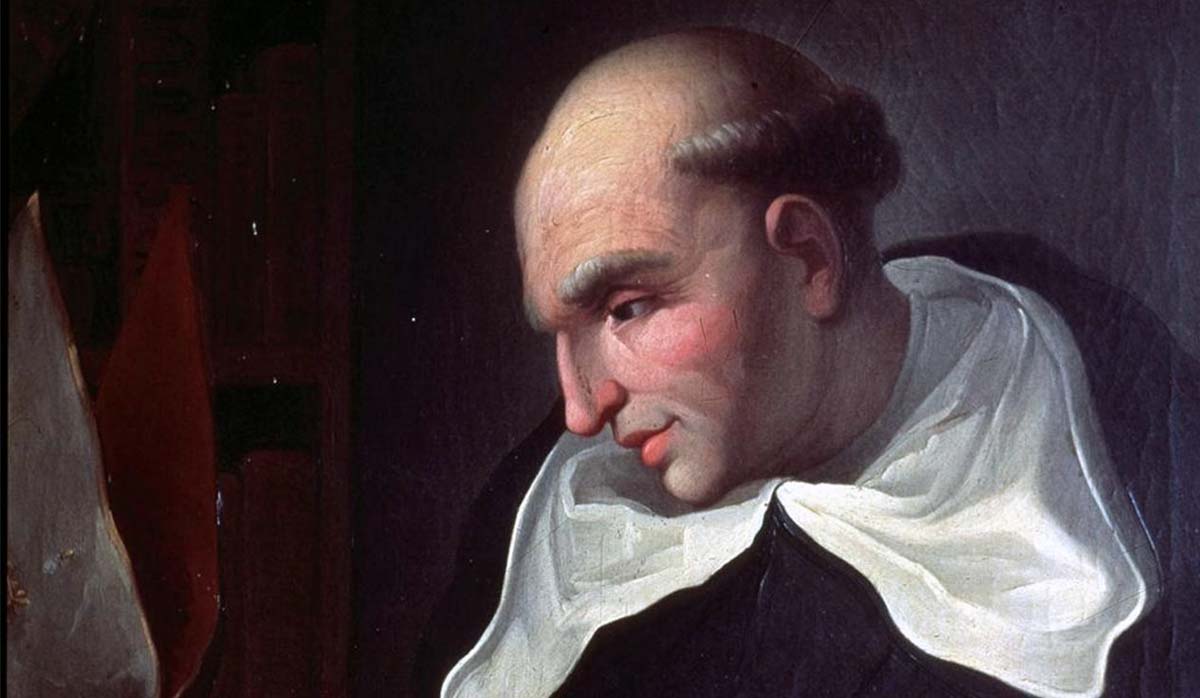
8.5 — Bartolomé de Las Casas (1474–1566)
- Bartolomé de Las Casas was a reform-minded Dominican friar who lived from 1474 to 1566.
- In 1542, he authored “The Destruction of the Indies” to document the dire plight of Native Americans and to denounce the policies of the Spanish in the New World.
- One of the issues that deeply horrified Las Casas was the devastating impact of diseases on the indigenous populations.
- He expressed his disbelief and despair at the extent of the suffering and loss of life among the Native Americans, stating that even he, as a witness to these events, found it difficult to believe such a tragedy could have occurred.
9. The Conquest of Mexico
The Conquest of Mexico started with Hernán Cortés, who led an expedition to Tenochtitlan, the capital of the Aztec empire. Moctezuma, the Aztec ruler, believed Cortés to be the god Quetzalcoatl, which led him to permit Cortés to approach the city without resistance. The Spanish presence in Mexico resulted in a drastic decline in the Indian population, plummeting from 20 million to 2 million in less than a century. The invaders not only brought conquest and death but also introduced their crops, animals, laws, and language to the region.
9.1 — Cortés’s Expedition to Mexico
- In 1519, Hernán Cortés embarked on an expedition to Mexico with several hundred men and sixteen fresh horses, aiming to explore and conquer the region.
- He rescued a Spanish castaway and a Mayan-speaking Indian slave on the island of Cozumel, near the Yucatán Peninsula.
- Cortés picked up a female Indian slave named Malinche, who knew both Mayan and Nahuatl, the language of the Aztecs.
- Malinche eventually learned Spanish and was baptized as Doña Marina.
- Cortés learned of unrest within the Aztec empire and tales of wealth in the Aztec capital, Tenochtitlán.

9.2 — Approaching Tenochtitlán
- Cortés burned his ships to eliminate the possibility of retreat and gathered an army of about twenty thousand Indian allies.
- He marched on Tenochtitlán, the capital of the Aztec empire, which amazed the Spaniards with its size, pomp, and beauty.
- The city was situated on an island in the center of a lake, connected to the mainland by causeways and supplied with fresh water through an aqueduct.
9.3 — Moctezuma and the Aztecs
- Initially, Aztec chieftain Moctezuma treated Cortés and his men hospitably, believing Cortés might be the god Quetzalcoatl returning from the east, as predicted in Aztec legends.
- The Spaniards’ insatiable hunger for gold and power led to their eventual downfall.
- On June 30, 1520, during the “noche triste” (sad night), the Aztecs attacked the Spanish, forcing them into a frantic and bloody retreat.
- Cortés laid siege to Tenochtitlán, which surrendered on August 13, 1521.
- A smallpox epidemic swept through the Valley of Mexico in the same year, further devastating the Aztecs.
9.4 — Consequences of the Conquest
- The combination of conquest and disease resulted in the fall of the Aztec empire and three centuries of Spanish rule in Mexico.
- The temples of Tenochtitlán were destroyed to make way for Christian cathedrals in Mexico City.
- The native population of Mexico dwindled from around 20 million to 2 million people in less than a century.
- The Spaniards introduced crops, animals, language, laws, customs, and religion to Mexico.
- Intermarriage between Spaniards and surviving Indians gave rise to a culture of mestizos, people of mixed Indian and European heritage.
- Mexican civilization today reflects a unique blend of Old World and New World influences, producing ambivalence and pride among Mexicans.
10. The Spread of Spanish America
Spain’s colonial empire expanded. As other European nations became a threat, Spain fortified their North American settlements to protect them from Portugal and France. The Spanish were truly interested in building an empire through conquest and assimilating other cultures, which created the discriminatory Casta System. In the American Southwest, Pope’s Rebellion resulted in the burning of churches and the killing of priests. It took nearly half a century for the Spanish to fully regain control of New Mexico.
10.1 — Rapid Growth of Spain’s Colonial Empire
- Spain’s colonial empire expanded rapidly in the wake of Christopher Columbus’s arrival in the Americas.
- Within approximately 50 years, numerous Spanish cities and towns thrived in regions like Peru and Mexico, known for their silver production.
- Around 160,000 Spaniards, primarily men, had subjugated millions of indigenous people.
- Majestic cathedrals, printing presses, and universities, including those in Mexico City and Lima, were established during this period.
10.2 — England and France Begin to Challenge Spain in North America
- Other European powers began exploring and encroaching upon the edges of Spain’s New World domain.
- In 1497–1498, English explorer John Cabot explored the northeastern coast of North America.
- Giovanni da Verrazano, a Florentine sailing for France, probed the eastern seaboard in 1524, followed by Jacques Cartier’s expedition in the St. Lawrence River in 1534.
- To protect their North American borderlands from encroachments and spread Christianity, the Spanish fortified and settled these regions.
10.3 — Spanish Fortifications and Settlements
- In 1565, the Spanish erected a fortress in St. Augustine, Florida, to block French ambitions and protect sea lanes to the Caribbean, establishing the oldest continually inhabited European settlement in future U.S. territory.
- Tales of Coronado’s 1540s expedition further north continued to pique Spanish interest.
- In 1598, Don Juan de Oñate led an expedition into the Rio Grande Valley, establishing the province of New Mexico.
- The Spanish aimed to convert indigenous peoples to Christianity, specifically Catholicism.
10. 4 — Spanish Mission System and Popé’s Rebellion
- Roman Catholic missions became central institutions in colonial New Mexico, focusing on converting native populations.
- Popé’s Rebellion in 1680 led to the destruction of Catholic churches and the killing of priests and settlers by Pueblo rebels.
- Spanish efforts to reclaim New Mexico from insurrectionary Indians took nearly 50 years.
10.5 — Spanish Expansion in Texas
- In response to French expeditions down the Mississippi River in the 1680s, Spain began establishing settlements in Texas around 1716.
- Some refugees from the Pueblo uprising settled in Texas, and missions, including the Alamo, were established.
10.6 — Spanish Expansion in California
- In 1769, Spanish missionaries, led by Father Junipero Serra, founded missions in California, starting with San Diego.
- The missions aimed to Christianize native Californians, but they often led to cultural loss and disease among the native populations.
10.7 — The Black Legend
- The misdeeds of the Spanish in the New World gave rise to the “Black Legend,” a concept portraying them as brutal conquerors who brought misery and death to indigenous people.
- While Spanish invaders did commit atrocities, they also established a vast empire, integrated their culture, laws, religion, and language with native societies, and laid the foundations for Spanish-speaking nations.
New World Beginnings APUSH Resources
This outline is based on the 16th edition of The American Pageant and connects to Unit 1: 1491–1607 of the AP US History curriculum. For more information, including terms and definitions, see the following:
- American History Central AP Units Guide
- Native American Societies Before European Contact
- European Exploration in the Americas
- Columbian Exchange, Spanish Exploration, and Conquest
- Labor, Slavery, and Caste in the Spanish Colonial System
- Cultural Interactions Between Europeans, Native Americans, and Africans

