

Essential Facts
- As the U.S. attempted to emerge from the Great Depression, Americans sought to remain insulated from the escalating tensions in Europe and the Far East.
- To improve its economic standing, the U.S. pulled out of the London Economic Conference (1933), reduced its control over the Philippines, established diplomatic relations with the Soviet Union, and implemented the Good Neighbor Policy in Latin America.
- Totalitarian regimes came to power in Germany (Adolf Hitler) and Italy (Benito Mussolini), upsetting the peace that had been achieved after World War I.
- Hitler’s Germany and Mussolini’s Italy sought to expand their territory in Europe, while Imperial Japan expanded into China.
- Congress used a series of Neutrality Acts to provide support for European democracies and to maintain Freedom of the Seas, but failed to prevent the Spanish Civil War.
- Britain and France used an Appeasement Policy with Hitler, allowing him to seize control of Austria and the Sudetenland.
- Hitler and Josef Stalin, the leader of the Soviet Union, agreed to a Non-Agression Pact, paving the way for Germany to invade Poland, starting World War II.
- The U.S. maintained its neutral stance, but slowly increased support for its allies through the Destroyers-for-Bases Agreement and the Lend-Lease Act.
- After Germany invaded France, Roosevelt ran for a third term as President, easily winning the Election of 1940.
- Hitler’s Germany and Imperial Japan formed an alliance, leading the U.S. to block the sale of military supplies to Japan.
- Japan responded by launching a sneak attack on the U.S. naval base at Pearl Harbor on December 7, 1941.
- The U.S. countered by declaring war on Japan and Germany, officially entering World War II on December 8, 1941.
Significance
Franklin D. Roosevelt and the Shadow of War is important to American History because it covers the nation’s path from Isolationism to its entry into World War II. As hostilities increased in Europe and the Far East, the U.S. slowly increased support for its allies and decreased support for hostile regimes. Imperial Japan responded by launching a massive sneak attack on U.S. naval forces at Pearl Harbor. Congress responded the next day with a Declaration of War, setting the stage for the U.S. to emerge from the war as a superpower, locked in a Cold War with the Soviet Union.

U.S. Isolationism in the 1930s
In the 1930s, Americans were focused on domestic problems caused by the Great Depression and tried to ignore international conflicts. They believed foreign conflicts were too expensive, in terms of lives and money. This is known as “Isolationism.”
- President Franklin D. Roosevelt initially supported this approach.
- Roosevelt’s primary goal during this period was to battle the Great Depression.
- As tensions in Europe increased, he recognized the need for U.S. involvement.
- Roosevelt argued that no nation could remain safe during global chaos.
- He believed the world could not be divided into “half-enslaved and half-free” nations.
Franklin Delano Roosevelt (1882–1945) — The 32nd President of the United States, Franklin D. Roosevelt, served from 1933 to 1945. He led the nation during the Great Depression and World War II, implementing the New Deal to provide relief, recovery, and reform. As a transformative leader, he expanded the federal government’s role in the economy and foreign policy, fostering programs like Social Security and rallying the Allies to victory in WWII. Roosevelt is often referred to simply as “FDR.”
The London Economic Conference
The London Economic Conference took place in the summer of 1933 as world leaders looked to develop a coordinated international response to the global economic depression.
- 66 nations sent delegates, including the U.S.
- The delegates were focused on stabilizing national currencies and their exchange rates.
- By 1933, global trade had nearly disappeared due to the economic crisis.
- Currency stabilization was viewed as being critical to reviving global trade.
Roosevelt was more interested in prioritizing U.S. economic recovery over international cooperation.
- He initially supported sending a U.S. delegation to the conference, including Secretary of State Cordell Hull.
- Roosevelt opposed the conference’s focus on stabilizing currencies.
- He preferred inflationary policies like gold manipulation to boost the U.S. economy.
- Roosevelt believed an international agreement could limit U.S. economic recovery.
- He delivered a radio message, rejecting the London Conference’s goals, and effectively withdrawing the U.S. from the meetings.
Roosevelt’s announcement undermined the Conference, and some of the delegates accused the U.S. of acting in bad faith.
- The worldwide economic crisis continued.
- International cooperation became harder to achieve during the 1930s.
- Roosevelt’s decision reflected America’s isolationist stance.
Some have argued that U.S. isolationism may have indirectly helped dictators, who took actions that disrupted global peace. As a result, the U.S. faced consequences for believing it could act independently in a world that was becoming more interconnected.
London Economic Conference (1933) — World leaders gathered in London to address the global economic crisis following the collapse of international money markets in 1931 and 1932. The main goal was to stabilize currencies, especially those of the United States, France, and Great Britain. The talks failed when President Roosevelt refused to give up his plan to inflate U.S. currency through gold purchases and silver remonetization. European nations rejected these ideas, favoring a return to the gold standard instead.
Cordell Hull (1871–1955) — Hull enjoyed a long political career as a progressive Democrat. After serving in state and federal positions, he became Secretary of State under President Franklin D. Roosevelt in 1933. Hull promoted lower tariffs to boost global trade and led the passage of the Reciprocal Trade Agreements Act of 1934. He also helped shape the Good Neighbor Policy with Latin America.
Freedom for (from?) the Filipinos and Recognition for the Russians
The Great Depression limited U.S. ambitions in the Far East, including reduced involvement in the Philippines.
- Economic struggles made Americans reluctant to support the Philippines, which was expensive.
- U.S. taxpayers viewed the Philippines as a financial burden.
- Organized labor opposed low-wage Filipino workers entering the U.S. job market.
- American sugar producers sought to eliminate competition from Philippine sugar producers.
The Tydings-McDuffie Act and Philippine Independence
In 1934, Congress passed the Tydings-McDuffie Act to honor its promises of granting the Philippines independence.
- The act gave the Philippines a timeline of economic and political preparations that Congress felt were needed for independence.
- Complete independence for the Philippines was set for 1946.
- The U.S. agreed to give up its army bases in the Philippines.
- The status of U.S. naval bases was left undecided for future negotiations.
Millard E. Tydings (1891–1961) — Tydings was a conservative Democrat from Maryland who served in both the House and Senate. He opposed the New Deal while supporting States’ Rights and a limited Federal Government. Tydings voted against major New Deal programs like Social Security and the TVA. In 1938, Roosevelt unsuccessfully tried to unseat him, but voters re-elected Tydings. He remained in the Senate until 1951.
Tydings-McDuffie Act (1934) — The Tydings–McDuffie Act set a 10-year path for Philippine independence, creating the Commonwealth of the Philippines. It allowed a continued U.S. naval presence and restricted Filipino immigration to the U.S. Japan’s World War II occupation delayed independence until 1946.
Japan Sees an Opportunity in the Far East
Americans prioritized their interests over support for Philippine independence. Isolationists supported the move as being consistent with their policy of non-involvement. Critics argue that the U.S. withdrawal from the Philippines ignored the unstable political situation in Asia.
- Economic terms imposed on the Philippines contributed to economic issues.
- Japan saw U.S. disengagement as an opportunity to expand its influence in Asia.
The United States Formally Recognizes the Soviet Union
In 1933, President Roosevelt formally recognized the Soviet Union despite opposition from anti-communist groups and Roman Catholics. This move went against America’s isolationist stance.
- The decision acknowledged the 16-year-old Bolshevik Regime.
- Roosevelt hoped the decision would promote trade with the Soviet Union.
- He wanted to strengthen the Soviet Union to counterbalance growing threats from Germany and Japan.
Bolshevik Regime — The Russian Communist Party, which took control of Russia in 1917. The regime’s policies, known as “Bolshevism,” were based on the ideologies of Karl Marx and Vladimir Lenin (Marxism–Leninism).
Marxism–Leninism — A political ideology combining the theories of Karl Marx and Vladimir Lenin. It calls for a leadership group to guide the Proletariat in overthrowing capitalism and establishing a dictatorship as a step toward a classless society. Marxism–Leninism emphasizes centralized planning, state control of the economy, and one-party rule. It was the guiding doctrine of the Soviet Union.
Bolshevism — A socialist ideology associated with the Bolshevik Party, led by Vladimir Lenin, which seized power during the Russian Revolution (1917). Advocating for a dictatorship of the proletariat, Bolshevism called for the overthrow of capitalist systems and the establishment of a communist state. The movement inspired fear in Western democracies, including the United States, especially during the Red Scare. It shaped Soviet social, domestic, and international policy and contributed to ideological tensions between the U.S. and the Soviet Union during the Cold War.
Proletariat — A term used in Marxist theory to describe the working class, particularly those who do not own property and must sell their labor to survive. In contrast to the capitalist class (the bourgeoisie), the proletariat was seen as the group that would rise and overthrow capitalist systems, establishing a classless society. This concept is essential to communist ideology and has influenced political movements during the 20th Century.
Socialism — Socialism is an economic and political ideology advocating collective or government ownership of the means of production to reduce inequality and provide public welfare. In the U.S., political leaders like Eugene V. Debs promoted socialist policies, influencing labor reforms and calling for economic justice.
Becoming a Good Neighbor
In his inaugural address, Roosevelt declared his intention to improve U.S. relations with Latin America through the “Good Neighbor Policy.”
- The Good Neighbor Policy marked a shift away from U.S. ambitions as a global power.
- It complemented U.S. noninvolvement in Europe and withdrawal from Asia.
- U.S. interests and activities were focused on the Western Hemisphere.
Since the Spanish-American War (1898), U.S. military intervention in the Caribbean had created some tension. However, the Great Depression reduced U.S. economic involvement in Latin America, which in turn contributed to a decline in its military presence.
- Many American investors in Latin American securities suffered financial losses.
- Decreased U.S. investment meant fewer resources to justify a strong military presence.
The decline in interventions reflected a shift away from aggressive economic and military policies.
- In 1934, the U.S. withdrew its last Marines from Haiti.
- That same year, Cuba was freed from the restrictions of the Platt Amendment, though the U.S. retained its naval base at Guantanamo Bay.
- In 1936, the U.S. also reduced its control over Panama.
Spanish-American War (1898) — The Spanish-American War was fought between the United States and Spain. The U.S. won the short war, which took place primarily in Cuba. The outcome signaled the emergence of the United States as a global power and the end of Spain’s empire in the Americas.
Platt Amendment (1901) — An agreement that made Cuba a United States protectorate, granting the U.S. control over Cuba’s foreign policy and the right to intervene in its affairs. Although Cuba hoped for complete independence after the Spanish–American War, it accepted these restrictions and included them in its constitution. The U.S. also secured a lease on Guantánamo Bay. Despite the withdrawal of troops in 1902, the amendment justified repeated U.S. interventions until its repeal in 1934.
Tension with Mexico
The Good Neighbor Policy emphasized consultation and nonintervention. However, this was tested in 1938 when Mexico seized U.S. oil properties, provoking anger among American investors.
- American investors pressured Roosevelt to use the military to intervene and reclaim their businesses.
- Roosevelt resisted, staying true to the Good Neighbor Policy.
- A settlement with Mexico was reached in 1941, although U.S. oil companies incurred significant losses.
Success of Roosevelt’s Good Neighbor Policy
The Good Neighbor Policy fostered goodwill in Latin America despite some financial losses for the U.S.
- Roosevelt became highly respected in Latin America, earning unprecedented admiration for a U.S. leader.
- In 1936, Roosevelt attended the Inter-American Conference in Buenos Aires, Argentina, as a “traveling salesman for peace.”
- The policy marked a new era of friendly relations between the U.S. and nations in Latin America.
Good Neighbor Policy — A foreign policy approach that shifted U.S. relations with Latin America, moving away from military intervention toward mutual respect and cooperation. Starting under President Coolidge and expanded by Herbert Hoover and Franklin D. Roosevelt, the policy included troop withdrawals, reduction of intervention, and official declarations of non-interference. It culminated at the Montevideo Convention (1933). Latin American nations welcomed the change, and many later supported the Allies in World War II, influenced by improved diplomatic ties.
Inter-American Conference (1936) — Also known as the Buenos Aires Conference for the Maintenance of Peace, it was called for by the U.S. over concerns about increasing hostilities in Europe, Asia, and the Far East. Cordell Hull led the U.S. delegation, and President Roosevelt delivered a speech.
Secretary Hull’s Reciprocal Trade Agreements
The U.S. implemented a Reciprocal Trade Policy that aligned with the principles of the Good Neighbor Policy. It was designed by Secretary of State Cordell Hull, who also supported low tariffs. The policy was popular in Latin America because it promoted mutual economic benefits.
- Hull and Roosevelt viewed trade as a reciprocal process that benefits both buyers and sellers.
- They believed that high tariffs would slow foreign trade and could lead to trade wars and even military conflicts.
- The Reciprocal Trade Policy emphasized reducing trade barriers to encourage economic and diplomatic stability.

The Reciprocal Trade Agreements Act of 1934
- Congress passed the Reciprocal Trade Agreements Act in 1934.
- It was intended to boost U.S. exports during the Great Depression.
- The act sought to provide economic relief and promote recovery.
- It supported the New Deal’s low-tariff approach to trade.
- The act represented a shift toward reducing trade barriers and fostering international economic cooperation.
Features of the Reciprocal Trade Agreements Act
- The Reciprocal Trade Agreements Act modified the Smoot-Hawley Tariff.
- It allowed President Roosevelt to reduce tariffs by up to 50% if the partner country agreed to similar reductions.
- Trade agreements made under this act did not require Senate approval.
- This was intended to speed up the process of making reciprocal trade agreements.
- This reduced the influence of Congressional lobbying.
New Deal — The New Deal was a series of programs and policies implemented in the 1930s by President Franklin D. Roosevelt in response to severe economic and social issues in the United States, caused by the Great Depression.
Smoot-Hawley Tariff (1930) — Enacted in 1930, the Smoot-Hawley Tariff raised U.S. import duties to protect domestic industries during the Great Depression. Sponsored by Senator Reed Smoot and Representative Willis Hawley, it triggered retaliatory tariffs from other countries, reducing international trade and worsening global economic conditions. The tariff was an example of protectionist policies that many historians believe made the Depression worse.
Achievements of the Reciprocal Trade Agreements Act
By 1939, Secretary Hull had negotiated trade agreements with 21 countries, and U.S. foreign trade grew significantly.
- The agreements improved economic and political ties, especially with Latin America.
- The act promoted peace in an increasingly hostile global environment.
- It was a departure from the protective tariff policy that had dominated since the Civil War.
- The act helped rectify some of the economic damage caused by post-WWI tariff policies.
- It laid the foundation for the free-trade system that emerged after WWII, which promoted unprecedented international trade growth.
The Reciprocal Trade Agreements Act (1934) — Allowed the president to negotiate lower tariffs with other countries to boost trade and help the economy. It aimed to reverse the damage caused by earlier high-tariff policies. Led by Secretary of State Cordell Hull, the act marked a shift in U.S. trade policy. Congress renewed it several times, and by 1945, the U.S. had signed 37 bilateral trade agreements that helped reduce global trade barriers.
Impulses Toward Storm-Cellar Isolationism
The Great Depression, which followed World War I, fueled social and economic instability, leading to an increase in totalitarian regimes after 1918, including:
- The Soviet Union, which was led by Joseph Stalin.
- Benito Mussolini took control of Italy in 1922, establishing a Fascist regime (Mussolini’s Italy).
- Adolf Hitler rose to power in Germany in 1933 (Hitler’s Germany).
Josef Stalin (1878–1953) — Stalin was the dictator of the Soviet Union from the mid-1920s until he died in 1953. He led it through World War II, helping establish it as a world superpower. Stalin ruled with total control, using secret police, violent purges, and forced labor camps to silence opponents. He also launched large-scale economic plans that modernized the Soviet economy but caused widespread suffering.

Soviet Union (USSR) — The Union of Soviet Socialist Republics was a communist nation formed in 1922 after the Russian Revolution. It was made up of multiple republics, with Russia as the largest. The USSR became a world superpower under the leadership of Josef Stalin, who promoted state-run industry and rejected capitalism. It was a significant Allied power in World War II and later a key player in the Cold War against the United States.
Totalitarianism — A political system in which the government holds absolute authority over all aspects of public and private life, typically restricting individual freedoms. Under totalitarian regimes, a single leader or party often controls the economy, education, media, and political expression, using propaganda, surveillance, and repression to maintain power.
Fascism — A political system that emphasizes nationalism, a strong centralized government, and a dictatorial leader. Fascism rejects democracy, promotes militarism, and limits individual freedoms. Fascist regimes seek to control society and suppress opposition, usually through propaganda, censorship, and violence. The most well-known examples are Mussolini’s Italy and Hitler’s Germany.
Capitalism — Capitalism is an economic system in which private individuals or businesses own and operate the means of production, distribution, and exchange. It emphasizes free markets, competition, and profit-making with minimal government interference. Capitalism has been a dominant system in the United States, though debates over regulation and social welfare have shaped its evolution, especially during periods like the Great Depression.
Adolf Hitler’s Rise in Germany
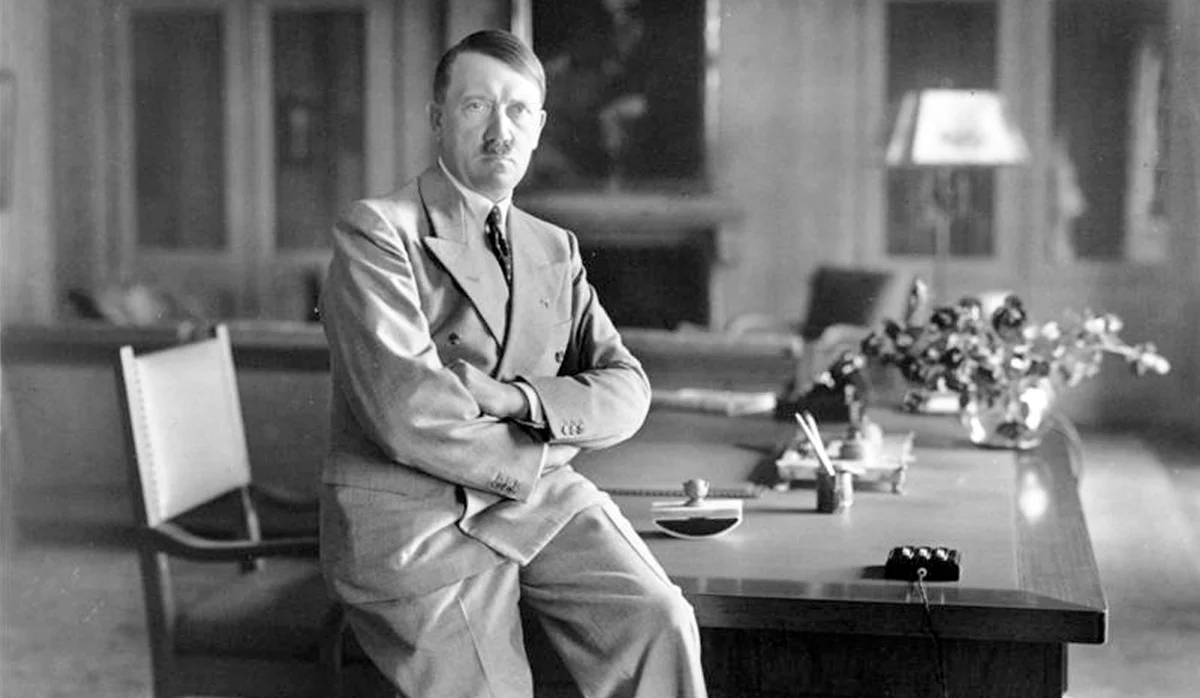
Adolf Hitler emerged as the most dangerous totalitarian due to his mix of power and impulsiveness.
- Hitler was a failed artist from Austria who served in World War I, but possessed exceptional oratory and leadership skills.
- He gained control of the National Socialist Party by exploiting resentment over the Treaty of Versailles and unemployment caused by the Great Depression.
- His rise was partly a consequence of the Allies’ short-sighted post-WWI policies.
- Desperate Germans rallied behind him, seeking relief from economic chaos and national shame.
- In 1936, Hitler allied with Mussolini through the Rome-Berlin Axis, solidifying ties between Germany and Italy.
Rome-Berlin Axis — Italy and Germany formed a military and political alliance in 1936. It was the beginning of cooperation between Adolf Hitler and Benito Mussolini. The alliance strengthened both countries’ goals of expanding their power in Europe while resisting Communism. This partnership later became the foundation of the Axis Powers in World War II, including Japan.
Ambitions of Imperial Japan
Like Germany and Italy, Imperial Japan sought to increase its global influence. Like Germany, Imperial Japan also resented the terms of the Treaty of Versailles.
- It sought territorial expansion to address its growing population and limited resources.
- These ambitions contributed to rising tensions in the Far East during the Interwar Period.
In 1934, Japan announced its intention to terminate the 12-year-old Washington Naval Treaty. Japanese leaders were determined to increase their naval power in Asia.
- In 1935, at a conference in London, Japan destroyed hopes for effective naval disarmament.
- After being denied equal naval strength, Japan walked out of the multi-nation conference.
- Japan proceeded to accelerate the construction of large battleships.
Washington Naval Treaty (1922) — A treaty signed in 1922 by the United States, Britain, Japan, France, and Italy. Its main goal was to prevent a naval arms race after World War I by limiting the size and number of warships each country could build. The treaty set specific ratios for battleships and aircraft carriers and sought to promote peace by reducing military spending. The policy started to break down in the mid-1930s. It was also known as the Five-Power Treaty.
Mussolini’s Invasion of Ethiopia
Benito Mussolini used a border dispute as grounds for invading Ethiopia (Abyssinia) in 1935. His goal was to expand Italy’s territory into Africa.
- Italian forces used advanced weapons like bombers and tanks against poorly equipped Ethiopian defenders.
- Ethiopian resistance, using spears and outdated firearms, was quickly defeated.
- The League of Nations could have stopped Mussolini’s aggression by imposing an oil embargo on Italy.
- The fear of triggering a global conflict led the League to take no decisive action.
Abyssinian War (1935–1936) — Italy, led by Benito Mussolini, invaded the African nation of Ethiopia (then called Abyssinia) to build an empire. Despite fierce Ethiopian resistance, Italy used modern weapons, including poison gas, to win. The League of Nations condemned the invasion but failed to stop it. This conflict is also called the Second Italo-Ethiopian War.

Reasons for American Isolationism
Isolationism increased in the U.S. due to the rising global conflicts. Americans disapproved of dictators but believed geographic isolation protected them.
- Many still viewed U.S. involvement in World War I as a mistake.
- There was a push for a constitutional amendment to limit Congress’s ability to declare war without a public referendum, except in cases of invasion.
- In 1936, Princeton students humorously advocated for a “bonus” for Veterans of Future Wars (VFW) before they were sent to fight.
- Some scholars have argued that Americans were more concerned about being drawn into foreign conflicts than they were about the aggressive actions of Hitler’s Germany, Mussolini’s Italy, and Imperial Japan.
Johnson Default Debt Act
- Resentment over unpaid debts from World War I allies continued to linger.
- In 1934, Congress passed the Johnson Debt Default Act, banning nations that defaulted on debts from borrowing in the U.S.
Congress Legislates Neutrality
In the 1930s, companies manufacturing equipment, weapons, and ammunition for war were sometimes referred to as “merchants of death.” They were accused of profiting from and promoting war.
- In 1934, the Senate established the Nye Committee, led by Senator Gerald P. Nye, to investigate the arms industry.
- The committee sensationalized evidence, blaming American bankers and arms manufacturers for U.S. entry into World War I.
- Many believed that munitions makers had caused the war to profit financially.
- This reasoning fueled the idea that removing profits from arms sales could prevent future U.S. involvement in global conflicts.
Gerald P. Nye (1892–1971) — Nye was a progressive Republican senator from North Dakota who gained influence through journalism before entering politics. He opposed the New Deal, criticized Roosevelt’s foreign policy, and led a Senate investigation into the arms industry’s role in World War I. A strong isolationist, he supported the Neutrality Acts and campaigned against U.S. involvement in European conflicts. After Pearl Harbor, his views lost popularity, and he was defeated in 1944..
The Neutrality Acts of the Mid-1930s
Congress passed several Neutrality Acts in the 1930s due to public pressure to avoid war. They were primarily a response to fears of global conflict, heightened by Mussolini’s invasion of Ethiopia. When the President declared a foreign war, specific restrictions automatically applied.
- Americans were prohibited from sailing on ships of nations at war.
- The laws banned the sale or transport of munitions to warring countries.
- Loans to nations involved in conflicts were also forbidden under these acts.
The Neutrality Acts deviated from America’s traditional policy of “freedom of the seas,” which was a cause of previous wars, including the War of 1812 and World War I.
- The laws were designed to prevent scenarios that drew the U.S. into World War I, such as Unrestricted Submarine Warfare.
- If they had been enacted earlier, they might have kept the U.S. out of World War I.
- What had been viewed as dishonorable in President Woodrow Wilson’s era became acceptable to a disillusioned postwar generation.
Neutrality Acts — The Neutrality Acts were enacted by Congress in the 1930s to keep the U.S. out of foreign wars. Driven by public distrust and isolationist sentiment, the laws banned arms sales, loans, and travel involving warring nations. However, by 1939, as Germany invaded Poland and World War II began, public opinion shifted. President Roosevelt called for change, and Congress repealed the arms embargo. The 1939 Neutrality Act allowed weapons sales to Britain and France while maintaining U.S. neutrality.
Freedom of the Seas — A concept in international law that says the seas are open to all nations for navigation and trade, except for coastal regions. The U.S. supported this concept, especially during World War I, to protect its commercial shipping from interference. Tensions over violations of this concept, such as Germany’s Unrestricted Submarine Warfare, contributed to America’s eventual entry into World War I.
Statutory Neutrality — Shortcomings and Implications
Statutory Neutrality was a legal policy adopted by the United States in the 1930s to avoid involvement in foreign wars by enforcing strict neutrality.
It was a key part of the Neutrality Acts, which prohibited arms sales, loans, and transport of goods to nations at war. The policy represented widespread isolationist sentiment after World War I and sought to prevent the economic and political entanglements that had previously drawn the U.S. into global conflict.
However, Statutory Neutrality had various shortcomings, which led ot the U.S. being reactive, and, arguably, subject to the aggressive totalitarian regimes.
- It underestimated the global forces driving the oncoming global conflict.
- Americans believed they were in control of their fate regarding peace or war, which ignored the influence of aggressive dictatorships that had already set their plans in motion.
- Fear and isolationism prevented the U.S. from leveraging its power to influence global events.
Although the policy of Statutory Neutrality was legal, it introduced moral concerns regarding how totalitarian regimes were treating people. By not interceding, it can be argued that the U.S. emboldened the actions of Germany, Italy, and Japan.
- Efforts to remain neutral unintentionally advantaged dictatorships with superior military preparation.
- The U.S. withheld industrial support from democratic nations fighting against totalitarian regimes.
American Isolationism Dooms Loyalist Spain
The Spanish Civil War (1936–1939) previewed the conflicts of World War II. General Francisco Franco led insurgents in a rebellion against Spain’s government.
- Franco received support from Hitler and Mussolini.
- Spanish Loyalists who supported the government received limited support from the Soviet Union.
- Soviet involvement reduced American sympathy, especially among Roman Catholics.
U.S. Neutrality in the Spanish Civil War
- The U.S. maintained official relations with the Loyalists during the war.
- Loyalists, under normal policy, should have been allowed to purchase U.S. munitions.
- Congress amended the Neutrality Laws to impose an arms embargo on both Loyalists and Franco’s insurgents.
- President Roosevelt supported the embargo.
- Franco praised Roosevelt for his impartiality, calling him a “true gentleman.”
- Roosevelt later expressed regret for the neutral stance that hurt the Loyalist effort.
Fall of the Spanish Republic
Franco overthrew Spain’s republican government, due in part to military support from Hitler and Mussolini.
- Democracies, including the U.S., prioritized avoiding war over aiding a fellow democracy.
- This inaction effectively allowed the Spanish government to be defeated.
- The lack of resistance emboldened dictators, encouraging them to engage in further aggression.
- These events contributed to the escalation of tensions leading to World War II.
Spanish Civil War (1936–1939) — The Spanish Civil War started in 1936 when General Franco led a military uprising against the elected Popular Front government. Backed by Germany and Italy, Franco’s Nationalists defeated the Soviet-supported Republicans by 1939. The war left over 200,000 dead, millions wounded, and half a million exiled. After victory, Franco ruled Spain as a dictator but maintained neutrality during World War II, balancing authoritarian control with limited opposition and restoring influence for the Catholic Church.
U.S. Unpreparedness Before World War II
Government investment in the military was limited during the Great Depression to help ease the burden on taxpayers. As a result, the U.S. adopted policies that avoided a military buildup despite rising threats worldwide.
- The U.S. Navy’s strength declined partly due to the belief that large fleets caused wars.
- When President Roosevelt called for military preparedness, critics accused him of being a warmonger.
- In 1938, Congress approved a $1 billion naval construction act, but it was too late to address the growing threats.
- The U.S. is often accused of being “unprepared” for World War II, even though there were no imminent threats to its safety.
Appeasing Japan and Germany
Appeasement is a diplomatic policy aimed at avoiding conflict by making concessions. In the 1930s, Britain and France adopted Appeasement in response to Adolf Hitler’s territorial demands. In hopes of maintaining peace, Germany was allowed to annex Austria and the Sudetenland. However, Hitler pushed even further by invading Poland in 1939 and triggering World War II.
Japan’s Invasion of China and U.S. Neutrality
In 1937, Japan invaded China, an attack that is considered a precursor to World War II. Roosevelt avoided enforcing U.S. neutrality laws by not labeling the conflict as an officially declared war.
- As a result, the U.S. could continue to send munitions shipments to China.
- However, Japan was also able to purchase shipments of U.S. war supplies.
Roosevelt’s “Quarantine Speech”
On October 5, 1937, Roosevelt delivered his “Quarantine Speech” in Chicago. He called for “positive endeavors” to “quarantine” aggressive nations through economic embargoes.
- The speech was a response to escalating aggression by Italy and Japan.
- Isolationists strongly protested, fearing that economic measures might escalate into military conflict.
- The backlash led Roosevelt to backtrack and adopt less confrontational methods to address the threats of the totalitarian regimes in Europe.
The Panay Incident and Rising Tensions with Japan
On December 12, 1937, Japanese planes attacked and sank the USS Panay in Chinese waters, killing three Americans and wounding many others. Although Japan apologized and paid $2.2 million, the incident exposed American isolationism and reluctance to confront aggression, particularly when compared to past events such as the Sinking of the USS Maine and the Sinking of the Lusitania.
- Japanese forces bombed and sank the U.S. gunboat Panay in Chinese waters, killing three and wounding 30 Americans.
- Unlike the 1898 Maine incident, this attack did not lead to war.
- The U.S. maintained its isolationist stance.
- Japan issued apologies and paid indemnities, helping to avoid escalation.
- Americans accepted Japan’s reparations, prioritizing peace over retaliation.
- Emboldened by the lack of a significant U.S. response, Japanese militarists increased acts of humiliation against American civilians in China.
Sinking of the USS Maine (1898) — The USS Maine, a U.S. Navy battleship, exploded and sank in Havana Harbor on February 15, 1898, killing 266 American sailors. Although the cause of the explosion remains disputed, newspapers blamed Spain, fueling public outrage. The incident contributed to the Spanish-American War, as the slogan “Remember the Maine!” rallied support for military intervention.
Sinking of the Lusitania (1915) — The British ocean liner Lusitania was torpedoed by a German U-boat on May 7, 1915, off the coast of Ireland. The attack killed 1,198 people, including 128 Americans. Germany justified the attack, claiming the Lusitania was carrying munitions to arm its enemies. The incident caused international outrage, intensifying anti-German sentiment and pressuring the U.S. to reconsider its neutrality. The sinking became a key factor in the eventual U.S. entry into World War I.
Hitler Defies the Treaty of Versailles
In 1935, Hitler took one of his first steps in defiance of the Treaty of Versailles by reintroducing compulsory military service in Germany. He followed this with more aggressive actions:
- In 1936, Hitler sent troops into the demilitarized Rhineland, violating the treaty again, as Britain and France hesitated to act.
- He escalated his campaign against Jews, ultimately orchestrating the Holocaust.
- Hitler urged Germans to prioritize military buildup over consumer goods with the slogan “guns over butter.”
- Under his direction, Germany developed a formidable, modernized military, including an air force and mechanized ground forces.
In March 1938, Hitler annexed Austria (Anschluss), occupying it without opposition and uniting it with Germany.
- Democratic nations hoped this would satisfy Hitler’s territorial ambitions.
- Afterward, he started demanding the Sudetenland, a German-speaking region in Czechoslovakia.
- Britain and France sought to resolve the issue through negotiations.
- Roosevelt urged Hitler to pursue a peaceful settlement.
Treaty of Versailles (1919) — The peace treaty that officially ended World War I between Germany and the Allied Powers. Signed on June 28, 1919, it imposed territorial losses, military restrictions, and reparations on Germany. The treaty sought to prevent future wars by establishing the League of Nations. Many in the U.S. opposed its terms, particularly the League, leading the Senate to reject ratification. The treaty’s provisions contributed to political instability in Germany and the rise of Adolf Hitler.
Compulsory Military Service — A government policy that requires citizens to serve in the armed forces for a set period. In the United States, this system, also called “conscription” or the “draft,” has been used during major conflicts such as the Civil War, World War I, World War II, and the Vietnam War. The Selective Service Act of 1917 formalized the policy, which has led to controversy.
Anschluss — A German word means “joining together” or “union.” It refers to the unification of Germany and Austria in March 1938, which was prohibited by the Treaty of Versailles.
The Munich Conference and Hitler’s Betrayal
The Munich Conference (September 29-30, 1938) involved leaders from Germany, Italy, Britain, and France. Under the Appeasement Policy, British Prime Minister Neville Chamberlain agreed to Hitler’s demands to annex the Sudetenland. Despite the absence of Soviet and Czech representatives, the conference resulted in the Munich Agreement, and Germany’s takeover of the Sudetenland was approved, along with the promise of future peaceful negotiations between Germany and Britain.
- In September 1938, the Munich Conference was held to address Hitler’s demands for the Sudetenland in Czechoslovakia.
- Britain and France, unprepared for war, agreed to Hitler’s annexation of the Sudetenland.
- Western democracies hoped this concession would satisfy Hitler and secure “peace in our time.”
- Hitler suggested that his request for the Sudetenland would be his last territorial claim.
- The Appeasement Policy proved ineffective, amounting to a gradual surrender to aggression.
- In March 1939, Hitler violated the agreement and occupied the rest of Czechoslovakia.
Peace in Our Time — A phrase famously declared by British Prime Minister Neville Chamberlain in 1938 after signing the Munich Agreement with Adolf Hitler. Chamberlain believed the agreement, which allowed Germany to annex the Sudetenland from Czechoslovakia, would prevent another major war. Despite Chamberlain’s optimism, Germany continued to expand, a development that contributed to the outbreak of World War II.
Hitler’s Belligerency and U.S. Neutrality
The German-Soviet Nonaggression Pact
The German-Soviet Non-Aggression Pact, signed on August 23, 1939, shocked the world by aligning Hitler’s Germany and the Soviet Union. This agreement included the division of Poland and the occupation of the Baltic States. It facilitated Germany’s invasion of Poland, initiating World War II, and allowed the Soviet Union to pursue territorial expansion. Hitler’s betrayal of the pact in 1941 led to the invasion of the Soviet Union.
- Britain and France sought a mutual defense treaty with the Soviet Union to counter Hitler’s expansion.
- Distrust between the Soviets and Allied governments prevented an agreement.
- Stalin shocked the Allies by signing a treaty with Hitler.
The pact ensured that Germany and the Soviet Union would not attack each other, and Hitler did not have to be concerned about the Soviets retaliating when he invaded Poland.
- The Allies had hoped Hitler and Stalin would turn against each other.
- Stalin successfully manipulated the situation, anticipating that Germany and the Allies would destroy each other.
- Stalin sought to have the Soviet Union emerge as a dominant force in Europe after the conflict weakened all other major powers.
The Nonaggression Pact is considered a direct cause of the outbreak of World War II, because it allowed Hitler to invade Poland without having to worry about a military response from the Soviet Union.
Germany Invades Poland and World War II Begins
The Invasion of Poland by Germany on September 1, 1939, marked the start of World War II. Employing “Blitzkrieg” tactics, Germany quickly overwhelmed Polish defenses. The invasion led to a brutal occupation that included mass executions and forced labor. Despite significant Polish resistance efforts, the Fall of Warsaw and the implementation of Hitler’s policies resulted in immense suffering and loss.
- The German-Soviet Nonaggression Pact removed obstacles for Hitler to act aggressively in Europe.
- He demanded that Poland return territories taken from Germany after World War I.
- Poland refused to meet his demands.
- On September 1, 1939, Germany launched an invasion of Poland with mechanized military forces.
Blitzkrieg — The concept of blitzkrieg, often mythologized as a revolutionary German military doctrine during World War II, was the evolution of existing strategies focused on mobility, communications, and combined arms. While early successes in Poland and France contributed to the myth, serious logistical and operational flaws in the German war strategy were revealed as World War II carried on.
Fall of Warsaw — The capture of Poland’s capital by German forces on September 27, 1939, following weeks of intense bombing and ground assaults during the Invasion of Poland. A siege started on September 8 and marked one of the first major urban battles of World War II. The city’s fall signaled the defeat of Polish resistance in the west and led to the partition of Poland between Germany and the Soviet Union.
Britain and France Declare War on Germany
Following its invasion of Poland, Britain and France abandoned Appeasement and declared war on Germany. However, they were unable to provide meaningful military support to Poland.
- Poland fell within three weeks.
- As agreed between Hitler’s Germany and the Soviet Union, Stalin invaded eastern Poland.
U.S. Reaction and the Neutrality Act of 1939
Roosevelt issued neutrality proclamations as the U.S. sought to avoid involvement.
- Anti-Hitler Americans hoped for an Allied victory.
- Despite moral support for the Allies, the U.S. was determined not to repeat its experience in World War I, where it had been drawn into foreign conflicts.
The U.S. faced internal conflict over its neutrality as Britain and France needed American weapons.
- The Neutrality Act (1937) prohibited the sale of arms to nations at war.
- President Roosevelt convened Congress in a special session after the invasion of Poland to address the issue of an arms embargo.
The debate over lifting the embargo lasted six weeks and was highly contentious. However, Congress agreed to a new Neutrality Act on November 4, 1939.
- It allowed European democracies to purchase U.S. war materials on a “cash-and-carry” basis.
- Buyers had to pay upfront and transport goods in their own ships, avoiding loans, debts, and risks to American vessels.
- Roosevelt was authorized to designate “danger zones” that U.S. merchant ships were not allowed to enter.
- It was designed to assist Allied democracies while addressing the concerns of isolationists.
- The act disadvantaged aggressor nations, as Allied naval dominance in the Atlantic restricted their access to U.S. munitions.
- The law boosted the U.S. moral stance by aiding democracies and improved the economy through increased demand for war materials.
- The resulting economic boom helped alleviate unemployment that continued due to the Great Depression.
The Fall of France
The “Phoney War” and Soviet Aggression
After Poland’s fall, Europe experienced the “phony war,” a period of inactivity as Hitler prepared to attack France. During this lull, the Soviet Union invaded Finland to gain strategic buffer territory.
- Finland’s defense earned admiration in the U.S. This was because Finland was one of the few nations that had repaid its WWI debts to the U.S.
- Congress approved $30 million in aid to Finland for non-military supplies.
- Despite its resistance, Finland was defeated by the Soviet Union.
Phoney War (September 3, 1939–April 9, 1940) — A period of military inactivity on the Western Front following the Allied declaration of war on Germany. While Britain and France prepared for a long war, Germany completed its conquest of Poland. Misjudging German strength, the Allies focused on defense, believing Poland could only be liberated after Germany’s defeat. The phase ended when Germany invaded Denmark, Norway, the Low Countries, and France.
Hitler’s Blitzkrieg and the Fall of France
In April 1940, Hitler ended the inactivity by invading Denmark and Norway. In May, Germany launched attacks on the Low Countries (Netherlands and Belgium) before advancing into France.
- France surrendered in late June 1940, after Mussolini joined the conflict to claim spoils.
- The British conducted a successful evacuation at Dunkirk, saving much of their army despite significant losses.
- Winston Churchill became Britain’s Prime Minister, inspiring resistance through his determined leadership and speeches.
- Churchill rallied the British to endure the relentless bombing of their cities during Germany’s air offensive.
Low Countries — A historical and geographical region in Western Europe consisting primarily of Belgium, the Netherlands, and Luxembourg. In May 1940, Germany invaded the Low Countries as part of its strategy to bypass the French Maginot Line and launch an attack into France. The conquest of the Low Countries showed the effectiveness of Blitzkrieg tactics and expanded German control in Western Europe. The region remained under occupation until liberation in 1944–1945.
Maginot Line — A system of fortified defenses built by France along its border with Germany during the 1930s. It included bunkers, artillery batteries, and underground facilities. However, during World War II, German forces bypassed the Maginot Line by invading through the Low Countries, rendering the line ineffective. The failure of the Maginot Line exposed the limitations of static defenses against modern, mobile warfare and contributed to France’s defeat.

U.S. Reaction to France’s Surrender
In the U.S., France’s defeat was unexpected. It shocked Americans and shattered their sense of security. Britain became the last stronghold against Hitler in Europe, and the Fall of France marked a turning point in U.S. attitudes toward global involvement.
- At the onset of the war, the song “There’ll Always Be an England” rose in popularity.
- A British defeat would grant Hitler control over Europe’s resources, including shipyards, industries, and slave labor.
- Hitler might also seize the powerful British Navy, further endangering global stability.
This scenario started to unite Americans in supporting efforts against Axis aggression. Roosevelt urged the nation to expand its military capabilities, including air fleets and a two-ocean navy, which could counter the threats from both Germany and Japan.
- Congress approved $37 billion for defense, exceeding the total cost of World War I and surpassing the budgets of the New Deal.
- On September 6, 1940, Congress approved the first peacetime draft in U.S. history.
- It aimed to train 1.2 million troops and 800,000 reserves each year.
- This draft and military expansion were later adjusted in response to the demands of the war.
Strengthening the Monroe Doctrine
- The fall of European nations raised concerns that their colonies in the Americas might fall under German control.
- At the Havana Conference (1940), the U.S. and 20 Latin American nations agreed to collectively uphold the Monroe Doctrine.
- The doctrine, previously enforced unilaterally by the U.S., became a shared responsibility among the 21 nations.
- The agreement sought to prevent Axis powers from gaining a foothold in the Americas.
Monroe Doctrine — A U.S. foreign policy statement issued in 1823 by President James Monroe, declaring that the Western Hemisphere was closed to European colonization and political interference. It stated that any attempt by European powers to control or influence nations in the Americas would be viewed as a hostile act against the United States. The doctrine justified U.S. intervention in Latin America and shaped American foreign policy throughout the 19th and 20th Centuries.
Bolstering Britain with the Destroyer Deal (1940)
Before France’s fall in June 1940, the U.S. maintained a policy of technical neutrality. However, it left Britain as the only free democracy in Western Europe. Its solitary stand against Hitler prompted Americans to reconsider neutrality.
- In August 1940, Germany started air raids on Britain in preparation for a September ground invasion.
- The Battle of Britain, fought in the skies, lasted for months as the Royal Air Force (RAF) defended the British Isles.
- Britain’s resilience forced Hitler to indefinitely postpone his invasion plans.
Battle of Britain (1940) — A significant World War II air campaign waged by the German Luftwaffe against Britain from July to November 1940. The battle unfolded in three phases: targeting southern ports, then airfields and radar installations, and finally, extensive night bombings known as the Blitz. Despite initial success, the Luftwaffe’s shift to civilian targets ultimately allowed the Royal Air Force (RAF) to recover and defend Britain. Britain’s successful defense was a significant turning point in the war.
- The Battle of Britain led to more discussions in the U.S. about the direction of the nation’s foreign policy.
- Radio broadcasts from London informed Americans about the intensity of German air raids, increasing sympathy for Britain’s struggle.
- Despite growing sentiment to support Britain, it was not strong enough to compel the U.S. to enter the war.
Roosevelt’s Dilemma
Roosevelt faced a critical choice between maintaining American Isolationism and showing active support for Britain.
- The “Fortress America” approach called for focusing solely on defending the Western Hemisphere. This strategy would involve avoiding involvement in foreign conflicts and letting other nations manage the war independently.
- Alternatively, Roosevelt could aid Britain with all resources short of direct military involvement.
Fortress America — A movement that supported isolation but believed in strong national defense. They promoted rearmament, expansion of the U.S. Navy after 1938, and development of the B-17 bomber. They warned that global crises could threaten U.S. security and argued that weapons should be used to defend the nation and the Western Hemisphere rather than be sent overseas.
The Committee to Defend America by Aiding the Allies
The Committee to Defend America by Aiding the Allies (CDAAA) emerged as a leader in calling for the U.S. to support Britain. It used propaganda to appeal to both interventionists and isolationists.
- To interventionists, it argued that Britain’s fight was directly linked to U.S. security, using slogans like “Britain Is Fighting Our Fight.”
- For isolationists, it promoted aiding Britain “by all methods short of war” to keep the conflict contained in Europe.
The America First Committee and Isolationist Advocacy
The America First Committee was a prominent isolationist organization that opposed U.S. involvement in World War II.
- Its slogan, “England Will Fight to the Last American,” criticized aid to Britain as risking American lives.
- Members argued that the U.S. should focus on defending its own shores against a potential German assault.
- The group’s philosophy was encapsulated in the slogan “The Yanks Are Not Coming.”
- Colonel Charles A. Lindbergh, the famed aviator who first crossed the Atlantic in 1927, became the committee’s leading spokesperson.
America First Committee (AFC) — The leading isolationist group in the United States before World War II. It opposed foreign aid and overseas involvement but supported defense measures. Charles Lindbergh was its main spokesperson. The group disbanded after the attack on Pearl Harbor.
Charles Lindbergh (1902–1974) — An American aviator who gained international fame in 1927 by completing the first solo nonstop flight across the Atlantic Ocean in his plane, the “Spirit of St. Louis.” In the late 1930s, Lindbergh became a leading voice in the America First Committee, opposing U.S. involvement in World War II. Though admired for his aviation feats, his political views created controversy.
The Destroyers-for-Bases Agreement (1940)
The Destroyers-for-Bases Agreement, announced on September 3, 1940, allowed the United States to provide 50 outdated destroyers to Britain in exchange for long-term leases on strategic naval bases in the Atlantic and Caribbean. Though the ships were in poor condition, the deal lifted British morale and signaled a shift in U.S. policy toward involvement in World War II. It also prompted Germany to push Japan toward the Tripartite Pact, as nations started to increase naval power during World War II.
- Britain needed destroyers to combat German submarine attacks on its shipping.
- Roosevelt bypassed Congress by signing an Executive Order.
- In exchange, the U.S. gained access to eight strategic defense base sites, including Newfoundland and South America, for 99 years.
- This deal bypassed formal neutrality laws and demonstrated U.S. support for Britain while avoiding direct involvement in the war.
- It strengthened both nations’ defenses and marked a significant step toward greater U.S. engagement in the conflict.
Destroyers — Small, lightly armed warships capable of sailing at a high speed.
Executive Order — A directive issued by the President of the United States that manages operations of the Federal Government and has the force of law. While not requiring Congressional approval, Executive Orders must be based on existing statutes or constitutional authority. Presidents have used them to shape policy, respond to emergencies, or enforce laws, such as Executive Order 9066, which authorized Japanese American internment during World War II.
- The transfer of 50 destroyers to Britain involved a questionable interpretation of U.S. law regarding the ownership of government property.
- Supporters of aiding Britain applauded the move as a necessary step in a time of crisis.
Critics understood the need for action, but objected to the lack of Congressional debate and oversight. Prominent critics were the America First Committee, isolationists, and some Republicans.
- Roosevelt justified his actions by citing the urgency of Britain’s situation and the risks of legislative delays.
- Transferring U.S. warships to Britain technically violated neutrality obligations.
- Traditional neutrality seemed outdated in the face of Hitler’s aggressive actions.
- Public opinion polls showed most Americans supported aiding Britain.
- The slogan “all aid short of war” was used to show support for Britain without direct involvement.
1940 Presidential Election
With the nation on the brink of war, Roosevelt decided to break with the precedent of a President serving only two terms. This precedent had been set by George Washington and followed by every subsequent President.
Republican Candidate: Wendell L. Willkie
Early Republican contenders for President included Senator Robert A. Taft of Ohio and Thomas E. Dewey of New York. However, the Republican National Convention in Philadelphia was unexpectedly captivated by Wendell L. Willkie, a political outsider.
- Willkie was a lawyer from Indiana with no prior political experience.
- Formerly a Democrat and head of a public utilities corporation, he moved into the Republican spotlight.
- His magnetic personality and homespun, Lincolnesque honesty were central to his appeal.
Wendell Willkie (1892–1944) — A Democratic lawyer and business executive, Willkie became a critic of the New Deal and switched to the Republican Party. He was nominated for President in 1940 with support from anti-Roosevelt groups. His campaign criticized federal overreach and Roosevelt’s third-term bid, but he lost due to the nation’s growing economy and fears of war. Despite a strong effort, he was defeated by Roosevelt in a landslide.
- The Republican platform criticized Roosevelt’s leadership as dictatorial and condemned the New Deal for being costly and inconsistent.
- Willkie, a liberal, did not oppose the New Deal outright but targeted its perceived inefficiencies and extravagances.
- Democratic opponents nicknamed Willkie “the rich man’s Roosevelt” and “the simple barefoot Wall Street lawyer.”
Thomas E. Dewey (1902–1971) — A prominent Republican leader known for fighting organized crime and serving as New York governor. He ran unsuccessfully for president in 1944 and 1948, promoted liberal Republican values, supported postwar foreign aid programs, and played a major role in helping Dwight D. Eisenhower win the 1952 election.
Robert A. Taft (1889–1953) — Taft was a prominent U.S. Senator from Ohio and a leading conservative voice in the Republican Party during the mid-20th Century. Known as “Mr. Republican,” he opposed many aspects of the New Deal and advocated for limited government, fiscal restraint, and non-interventionist foreign policy. Taft co-sponsored the Taft-Hartley Act of 1947, which restricted the power of labor unions.
Roosevelt’s Decision to Seek a Third Term
Roosevelt delayed announcing his decision to run for a third term until the last moment, claiming he wanted to retire. Still, he felt obligated to serve due to the ongoing global crisis.
- The Democratic National Convention in Chicago unanimously nominated Roosevelt.
- Many Democrats believed only Roosevelt, nicknamed “the Champ,” could defeat Willkie.
- Roosevelt’s slogan was “Better a Third Term Than a Third-Rater.”
Willkie’s Campaign Strategy
Willkie conducted an intense campaign, delivering over 500 speeches in a style reminiscent of William Jennings Bryan.
- Willkie chose not to criticize Roosevelt’s aid-to-Britain policies, recognizing the need to support the Allies.
- Instead, he focused on objecting to Roosevelt’s methods of implementing interventionist policies.
William Jennings Bryan (1860–1925) — A prominent American politician, orator, and three-time Democratic nominee for President (1896, 1900, 1908). Known for his advocacy of Free Silver, he delivered the famous “Cross of Gold” speech, opposing the Gold Standard and promoting economic reforms for farmers and laborers. A leader of the Populist Movement, Bryan also championed causes associated with the Progressive Movement, like Anti-Imperialism and Social Reform. Later, he gained attention for his role in the 1925 Scopes Trial, defending his religious principles.
Foreign Policy and Campaign Themes in the 1940 Election
Both Roosevelt and Willkie pledged to keep the U.S. out of World War II and to bolster national defense. Foreign affairs did not significantly differentiate the two candidates’ platforms.
- Willkie criticized Roosevelt’s perceived “dictatorship” and his unprecedented run for a third term.
- Campaign slogans for Willkie included “Win with Willkie,” “No Fourth Term Either,” and “There’s No Indispensable Man.”
Roosevelt Wins a Third Term
Roosevelt limited his campaign appearances, focusing instead on national issues. He denied accusations of planning to lead the U.S. into World War II, famously pledging in Boston, “Your boys are not going to be sent into any foreign wars.”
- During his campaign, Roosevelt defended the New Deal and emphasized the need to prepare for national defense and aid to the Allies.
- Roosevelt won a third term with 27,307,819 popular votes to Willkie’s 22,321,018, and an electoral margin of 449 to 82.
- Roosevelt’s margin of victory was narrower than in 1932 or 1936.
- The Democrats retained their majorities in the House and Senate.
Although some Democrats celebrated Roosevelt’s victory as an endorsement to break the two-term presidential tradition, it was more a reflection of voters’ reluctance to make a significant change during a volatile time. Without the threat of war, Roosevelt might not have retired.
- Many voters believed Roosevelt’s experience would be important if the U.S. became involved in the war.
- Willkie’s lack of political experience, despite his good intentions, made him less appealing as a leader on the worldwide stage.
Congress Passes the Landmark Lend-Lease Act
The Lend-Lease Act, signed by President Franklin D. Roosevelt on March 11, 1941, allowed the U.S. to provide military aid to nations critical to its defense, despite its neutrality. Initially benefiting Great Britain, the program expanded to include other nations such as China and the Soviet Union. By the end of World War II, over 40 nations had received aid valued at $49.1 billion. An agreement in 1942 further detailed the provisions and promoted economic cooperation.
The Lend-Lease Act (1941)
By late 1940, Britain faced financial exhaustion, struggling to sustain its war efforts. Roosevelt sought to avoid the contentious debt issues experienced after World War I. He proposed the Lend-Lease Act, allowing the U.S. to supply arms to Allied nations without immediate payment.
- Roosevelt compared the arrangement to lending a garden hose to a neighbor during a fire, with the equipment returned after the emergency.
- Isolationists, like Senator Robert Taft, criticized the plan, arguing it was impractical, likening it to lending chewing gum, saying, “You don’t want it back.”
The Lend-Lease Act was officially titled “An Act Further to Promote the Defense of the United States.” It was designed to provide military aid in terms of weapons and supplies, instead of troops.
- The plan allowed Allied nations to maintain their war efforts and prevent the conflict from spreading to the Americas.
- Under the plan, borrowed weapons or their equivalents were to be returned after the war’s conclusion.
Debate and Passage of the Lend-Lease Act
The Lend-Lease Act faced intense debate across the U.S., with opposition primarily from isolationists and anti-Roosevelt Republicans.
- Critics dubbed it “the blank-check bill,” fearing it granted unlimited aid without accountability.
- Isolationist Senator Burton Wheeler likened it to the Agricultural Adjustment Act (Triple-A), claiming it would “plow under every fourth American boy.”
Burton K. Wheeler (1882–1975) — A Democratic Senator from Montana and a leading isolationist before World War II. He opposed FDR’s policies like Lend-Lease and the draft, and supported the America First Committee. Wheeler only backed U.S. entry into the war after Pearl Harbor and later returned to practicing law.
Agricultural Adjustment Act (1933) — This act aimed to reduce agricultural overproduction and raise crop prices. It paid farmers to cut production of specific crops and livestock, stabilizing farm incomes during the Great Depression. However, it was criticized for displacing tenant farmers and sharecroppers.
- Supporters argued the act was vital for aiding Allied nations and preventing U.S. involvement in the war.
- Despite opposition, Congress approved the Lend-Lease Act in March 1941 by significant majorities.
The Lend-Lease Act was an important piece of legislation, directly challenging Axis powers, because it allowed the U.S. to support nations combating aggression, indirectly defending America.
- By 1945, the program provided approximately $50 billion in arms and equipment, exceeding the cost of U.S. involvement in World War I.
- The act can be viewed as an economic declaration of war, signaling increased U.S. involvement in global conflict.
- It was a precursor to direct military involvement, which many people thought was inevitable.
With the Lend-Lease Act, the U.S. openly abandoned neutrality. Unlike the Destroyers-for-Bases Agreement, the act was debated in Congress and received its approval..
- Americans recognized that neutrality principles from the 19th Century were ill-suited to the realities of the 20th Century.
- While Lend-Lease increased the risk of war, most Americans accepted this risk to prevent Britain’s defeat.
U.S. War Production Increases
The passage of the Lend-Lease Act increased foreign demand for U.S. weapons and resources, thereby boosting manufacturing and industrial capacity nationwide.
- This preparation came to light when the U.S. entered the war after the attack on Pearl Harbor.
- The infrastructure and production capabilities developed under Lend-Lease helped ensure Americans were ready for direct conflict.
German Reaction to Lend-Lease
Hitler viewed the Lend-Lease Act as an unofficial declaration of war on Germany by the United States.
- Prior to Lend-Lease, Germany avoided targeting U.S. ships.
- After Lend-Lease, Germany saw little reason to maintain restraint toward the U.S.
On May 21, 1941, a German submarine torpedoed the Robin Moor, an unarmed American merchant ship, in the South Atlantic, outside any declared war zone.
The Atlantic Charter
Two major events shaped the direction of World War II before the U.S. entered the conflict:
- The Fall of France in June 1940 left Britain as the last major democracy fighting against Hitler in Europe.
- Germany’s Invasion of the Soviet Union in June 1941 escalated the war by opening the Eastern Front.
Eastern Front — The massive battlefield between Germany and the Soviet Union from June 22, 1941, to May 8, 1945. Stretching 1,900 miles at its peak, it involved some of the largest and most brutal fighting in history, with up to 10 million soldiers engaged. Over 40 million people died, including 31 million Soviet civilians. German strategy included mass killings and the destruction of entire populations to seize land for resettlement.
Germany Initiates Operation Barbarossa
Hitler and Stalin maintained an uneasy alliance, despite their Non-Aggression Pact.
- Both sought to secure territorial gains but clashed over dominance in the Balkans.
- Stalin resisted Hitler’s ambitions for control.
- Hitler responded by planning an invasion of the Soviet Union, intending to seize Soviet resources, especially oil, and eliminate Stalin.
- Confident in his army’s strength, Hitler believed he could defeat the Soviet forces within weeks.
Balkans — A geopolitical region in southeastern Europe. In the early 20th century, the Balkans were disrupted by nationalist tensions, particularly among Slavic groups under Austro-Hungarian and Ottoman rule. The assassination of Archduke Franz Ferdinand in Sarajevo in 1914 triggered World War I. The region’s instability continued into the 1990s with the violent dissolution of Yugoslavia.
On June 22, 1941, Germany started Operation Barbarossa by launching a surprise attack on the Soviet Union, breaking the Non-Agression Pact.
- The invasion was initially viewed as a fortunate turn for the Allied democracies, as it diverted German resources and attention.
- Allied leaders hoped the conflict would weaken both Axis powers and the Soviet Union through mutual destruction.
- Military experts widely predicted a rapid Soviet collapse in the face of the powerful German offensive.
- The assault opened the Eastern Front, the war’s scope and intensity.
Operation Barbarossa — The German invasion of the Soviet Union commenced on June 22, 1941, aiming for a quick, decisive victory. Germany found early successes, encircling and destroying numerous Soviet forces. However, logistical issues and Soviet determination hindered long-term success. The Soviets suffered significant losses but managed to regroup, adapt, and launch counterattacks. Harsh winter conditions stalled German advances, and the Soviets responded with a significant counteroffensive near Moscow in December 1941. The conflict inflicted suffering on civilians, who suffered atrocities committed by German forces. Ultimately, the failure to achieve a quick victory exposed Germany, engulfing it in a two-front war that it could not sustain.
U.S. Reaction to Operation Barbarossa
Roosevelt responded by pledging support for the Soviet Union.
- Military supplies were promptly sent to aid the Soviets’ defense.
- Roosevelt expanded Lend-Lease aid to the USSR, providing $1 billion initially and ultimately $11 billion.
- He justified this support by interpreting Soviet defense as crucial to U.S. security.
- The Soviet Red Army, coupled with the harsh Russian winter, stopped the German advance at Moscow.
The Atlantic Conference of August 1941
In August 1941, Roosevelt and Churchill met secretly off the coast of Newfoundland. This was the first in a series of meetings between the two of them that were used to coordinate their wartime strategies.
- They discussed the ongoing threat of the Axis Powers in Europe and the Far East.
- They also discussed the situation in the Soviet Union and the increasing threat of Japan.
- The conference expanded the partnership between the U.S. and Britain before America’s official entry into the war.
The Atlantic Charter of 1941
The Atlantic Charter was an eight-point agreement between Roosevelt and Churchill, made during the Atlantic Conference. Later on, it was endorsed by the Soviet Union.
- Similar to Woodrow Wilson’s Fourteen Points, it outlined goals for a better post-war world.
- It opposed imperialistic annexations and supported self-determination, ensuring territorial changes aligned with the inhabitants’ wishes.
- It affirmed the right of nations to choose their governments and restore those abolished by dictatorships.
- Key objectives included global disarmament, lasting peace, and the establishment of a permanent system of general security, which was a precursor to the United Nations.
- It established an ideological framework for the Allied war effort and Post-War Reconstruction.
Some scholars believe the Atlantic Charter inspired liberals worldwide, much like Wilson’s Fourteen Points, offering hope for oppressed populations, such as the Poles, under foreign occupation.
- The agreement faced criticism in the U.S. from isolationists and Roosevelt’s political opponents, who questioned America’s right to collaborate with Britain on wartime policies while maintaining its neutral status.
- It can be argued that critics of the Atlantic Charter failed to recognize that the U.S. was no longer truly neutral, as Roosevelt had already committed the nation to supporting the Allies in various ways.
Atlantic Charter — Drafted on August 14, 1941, by Franklin D. Roosevelt and Winston Churchill, it outlined shared goals for the postwar world. Though the U.S. remained neutral, the Charter declared anti-Axis principles and liberal ideals like self-determination, free trade, and disarmament. It inspired hopes for a lasting peace but excluded colonial territories like India.
Fourteen Points (1918) — President Woodrow Wilson’s proposal for a post-World War I peace, known as the Fourteen Points, was presented in 1918. It outlined principles such as self-determination, free trade, open diplomacy, and the creation of a League of Nations to prevent future conflicts. The points sought to address the causes of war and promote lasting peace. His plan influenced the Treaty of Versailles, even though many of his ideas were altered during negotiations.
League of Nations — The League of Nations was an international organization established in 1920 as part of the Treaty of Versailles to promote peace and cooperation among nations and prevent future conflicts. Proposed by President Woodrow Wilson in his Fourteen Points, it aimed to resolve disputes through diplomacy. Despite its goals, the League faced significant challenges, including the U.S. Senate’s refusal to join and its inability to prevent aggression by Axis powers, leading to its eventual failure and the outbreak of World War II.
U.S. Destroyers and Hitler’s U-boats Clash
The U.S. continued to send shipments of arms to Britain under the terms of the Lend-Lease Act. These shipments were transported on British ships, but Britain lacked the naval strength to provide protection from German submarine attacks.
- To ensure the munitions reached Britain, U.S. warships were needed to escort the freighters.
- The possibility of the U.S. becoming directly involved in the war through convoy operations had been raised in Congress during the Lend-Lease debates but was dismissed by the Roosevelt Administration.
The administration’s strategy was to make gradual commitments to the war effort, handling one issue at a time to avoid escalating U.S. involvement. In July 1941, Roosevelt decided to start providing naval escorts for the shipments to Britain.
- Using his authority as Commander-in-Chief, Roosevelt ordered the U.S. Navy to escort the shipments as far as Iceland.
- Once the ships reached Iceland, British naval forces took over and escorted them to Britain.
Roosevelt’s Shoot-on-Sight-Policy
This decision was a significant step toward direct U.S. involvement in the war, as it involved American naval forces with British military operations in the Atlantic. Although Hitler ordered German naval forces to only attack American ships in self-defense, conflicts between the two navies were inevitable.
- In September 1941, the U.S. destroyer Greer was attacked by a German U-boat, but neither ship suffered damage.
- Roosevelt responded by declaring a “shoot-on-sight” policy regarding Axis naval vessels that threatened the Lend-Lease Convoys.
- On October 17, 1941, the Kearney was damaged in a battle with U-boats, resulting in the loss of 11 American sailors.
- Two weeks later, the Reuben James was torpedoed and sunk off Iceland, with more than 100 American casualties.
Revision to the Neutrality Act
Even before these incidents, American opinion was shifting further in favor of Britain. In November 1941, Congress revoked a portion of the Neutrality Act of 1939. American merchant ships were:
- Allowed to be armed.
- Allowed to enter combat zones while carrying munitions for Britain.
Surprise Assault on Pearl Harbor
Hitler’s Germany and Imperial Japan formed a new alliance in 1940, making the U.S. their mutual enemy in the Atlantic Theater.
- Japan’s position in the Far East was weakening as it struggled in its conflict with China, known as the Sino-Japanese War.
- Japan’s war effort relied on critical supplies from the U.S., including steel, scrap iron, oil, and aviation gasoline.
- Although unpopular, Roosevelt had avoided imposing an embargo on Japan, fearing it would provoke Japan into seizing the oil-rich but defenseless Dutch East Indies.
- The tension between Japan’s resource needs and American opposition to its aggression set the stage for the eventual attack on Pearl Harbor.
Marco Polo Bridge Incident (July 7, 1937) — Shots were fired near the Lugouqiao Bridge outside Beijing. Although it was unclear who fired first, Japan used the event to justify military escalation. Despite a Chinese apology, tensions grew, and clashes followed. Japan sent reinforcements and launched a full-scale invasion on July 27. This marked the official beginning of the Second Sino-Japanese War, which lasted until 1945 and significantly escalated conflict in East Asia.
Sino-Japanese War (1937–1945) — The outbreak in 1937 was the start of full-scale hostilities in East Asia before and during World War II. It started with the Marco Polo Bridge Incident and saw brutal fighting, including atrocities such as the Nanjing Massacre. Japan aimed to dominate China and secure resources, while China, led by Chiang Kai-shek, resisted. The war ended with Japan’s defeat in 1945.
Chiang Kai-shek (1887–1975) — A Chinese military and political leader who led the Republic of China from the late 1920s until his death. As head of the Kuomintang (Nationalist Party), he sought to unify China and resist Japanese aggression during the Sino-Japanese War. After losing the Chinese Civil War to Mao Zedong’s Communist forces in 1949, he retreated to Taiwan, where he established a rival government. He remained a key figure during the Cold War Era.
Imperial Japan Responds to U.S. Sanctions
As Imperial Japan became more aggressive in Southeast Asia, the U.S. took action. Congress approved a program in 1940 to expand the U.S. Navy to the point where it could challenge the Japanese Navy, if necessary, by 1942. One of the key issues was Japan’s occupation of Chinese territory.
- In late 1940, the U.S. imposed an embargo on supplies for Japan, escalating tension between the two nations.
- By mid-1941, the U.S. froze Japanese assets and halted all shipments of gasoline and other essential war materials.
- The embargo tightened Japan’s access to crucial resources, particularly oil, increasing the pressure on Japanese leadership.
Japanese leaders believed they had to give in to American demands or try to seize control of Southeast Asia’s oil and resources.
- By the end of 1941, Japan knew the U.S. would not accept its presence in China.
- Japan chose to take military action that would allow it to take control of the resources it needed in Southeast Asia, and decided to go to war with the U.S, by launching a surprise attack on Pearl Harbor.
By this time, U.S. codebreakers had cracked Japan’s top-secret code, so government and military officials knew Japan intended to attack.
- Roosevelt could not take preemptive military action without approval from Congress.
- The U.S. misinterpreted Japanese military movements in the Far East and expected Japan to attack British Malaya or the Philippines, not Hawaii.
- Officials in Washington did not anticipate Japan would be so bold as to attack Pearl Harbor, nor did they think Japan had the military capability.
The Attack on Pearl Harbor
On December 7, 1941, the Japanese Imperial Navy launched a surprise attack on the U.S. Navy’s Pacific Fleet at Pearl Harbor, leading to significant destruction and loss of life. Despite the severe damage, critical repair facilities remained intact, allowing for a relatively quick recovery. This attack provoked the United States to join World War II.
- The surprise attack on Pearl Harbor occurred while Imperial Japan was still engaged in negotiations with the U.S.
- Japanese bombers, launched from aircraft carriers, struck without warning in the early hours of “Black Sunday.”
- The attack caused approximately 3,000 American casualties, destroyed many aircraft, and nearly wiped out the U.S. Pacific Fleet, sinking or immobilizing all eight battleships.
- Numerous smaller vessels were also damaged or destroyed in the assault.
- Fortunately, the three U.S. aircraft carriers were not in the harbor at the time, sparing them from the attack and preserving a crucial component of the Pacific Fleet.

America Responds to Pearl Harbor
Three days later, President Roosevelt delivered a speech in which he famously declared that December 7, 1941, was a day that would “live in infamy.”
- Congress declared war on Japan on December 8, 1941, with only one vote against it.
- The U.S. was already unofficially involved in the war due to Lend-Lease and other support for the Allies.
- On December 11, 1941, Germany and Italy, Japan’s allies, declared war on the United States, eliminating any doubts about further indecision in Congress.
- The U.S. formally accepted these declarations of war on the same day with unanimous votes in both the Senate and the House.
- The U.S. was now fully involved in World War II.
America’s Transformation from Bystander to Belligerent
Imperial Japan’s attack on Pearl Harbor initially appeared successful, crippling the U.S. Pacific Fleet and causing massive damage. However, the attack had the unintended effect of massive public support for the American war effort.
- Before the attack, a majority of Americans still favored isolationism.
- The attack silenced isolationists, and Senator Burton K. Wheeler declared the only option for dealing with Japan was “to lick hell out of them.”
- The Attack on Pearl Harbor was a major turning point in World War II, as the U.S. joined the Allies in the campaign to defeat the Axis Powers.
